
Get You Updated on Playground Equipment News.
Indoor playground is such a brutal industry for the unprepared investors.Please talk to a middleman, if you are looking for a sugar-coated sales lies.If you ask for the cold, hard but useful truth about what is the typical income earned for an indoor playground, you can continue to read this article.
At Yommi, we don't just manufacture steel and foam but a profitable business models. The phenomenom i used to see that investors lose their life savings because they believed a "3-month ROI" lie. I’ve seen others build empires because of their understanding about the math behind the fun.
1. The ROI Myth: Why 12 Months is the Real "Gold Standard"
Let me tell you the brutal truth directly: Anyone telling you that you’ll cover the cost in 3 months is selling you a dream of buble. As a 15 years experienced commercial playground equipment manufacturers, we know the reality. You should know that a healthy, well-managed and medium-sized indoor playground typically meets its break-even point in 6 to 12 months.
In this industry, 12 months point for breaking the even is what I call the "Conservative Gold Standard." If your business plan relies on a 90-day recovery of capital, you aren't investing; you're gambling. Why so many suppliers lie to their customers? The reaseon is simple: they want to close the deal. They "paint a big cake",a industry term for drawing a fantasy through exaggerating foot traffic and ignoring to the bloody costs such as promotional marketing, high-intensity labor, and specialized equipment cleaning.
When a manufacturer lies to you about the data, they are setting a trap for you. I have seen the aftermath when a client’s revenue doesn't even cover the interest on their loan after a years' operation. When you found the spreadsheet was a work of fiction,your trust in the supplier certainly collapses. Because you don't just lose money,but also lose your reputation in the local market. At Yommi, we'd rather lose an order by telling the truth than gain a client by selling a lie. We calculate ROI based on "Stress-Test" scenarios instead of those best-case fairies.
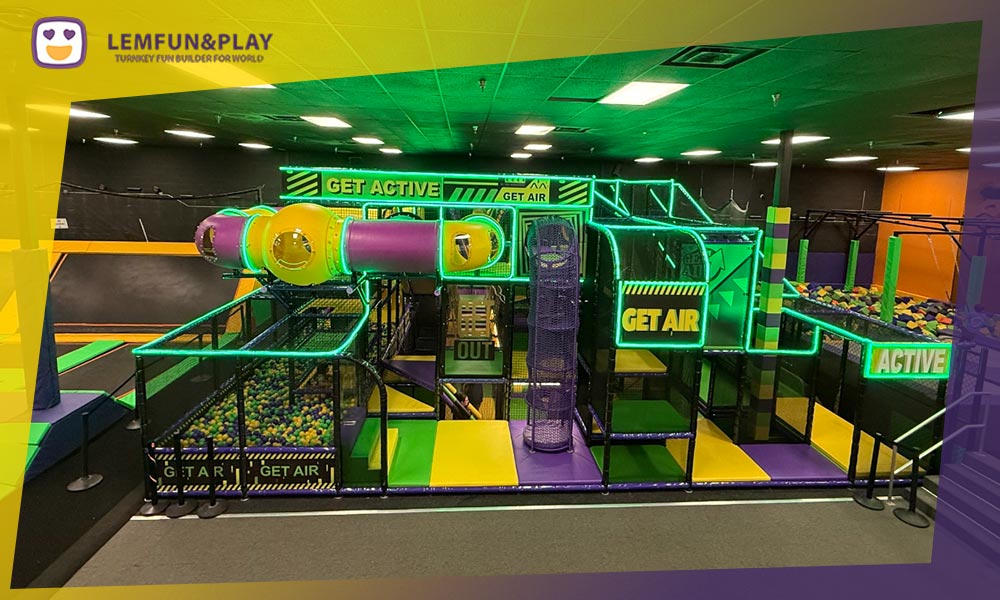
If you think you’re just selling tickets, you’ve already lost the game before it started. The typical income earned for an indoor playground isn't derived solely from the gate. In fact, the most successful venues we've equipped see their net profit margins sustain at 30% or higher, with annual ROI reaching a staggering 144% in high-density urban markets.
How do the "Pros" do it? They treat the playground as a platform, not just a product.
The Membership Engine: One-time tickets are for tourists; memberships are for moguls. High-frequency visitors provide the predictable cash flow you need to cover fixed costs like rent.
The "Event" Upsell: Birthday parties are the highest-margin product in this business. You aren't just selling a room; you're selling a "hands-off" experience for exhausted parents.
Ancillary Sales (F&B): Selling branded socks, toys, or even high-quality coffee creates a "third-space" revenue stream that pure-play competitors miss.
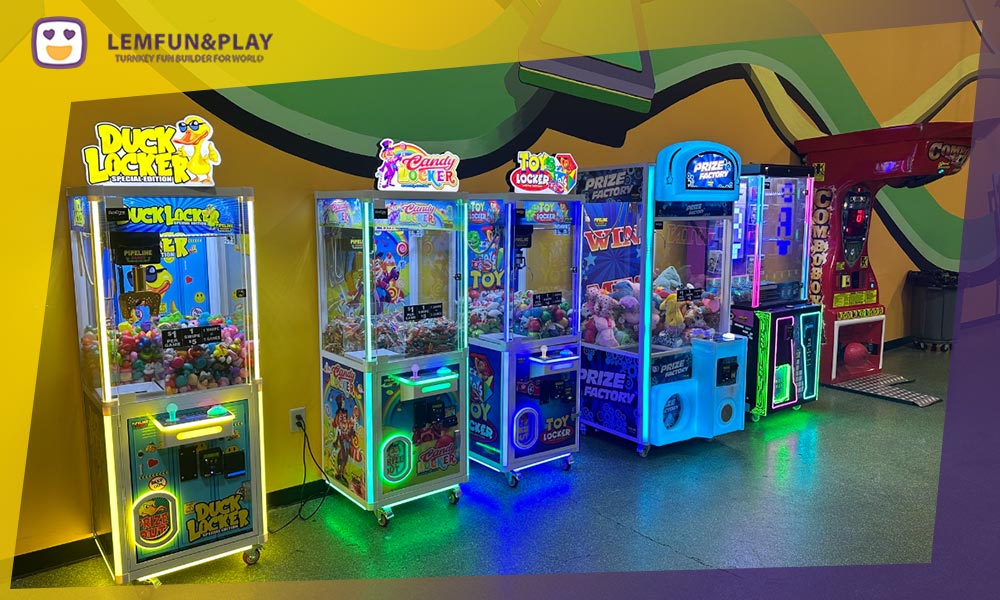
In our Florida project, we proved this. We didn't just dump a bunch of soft playground equipment into a room. We designed a strategic layout: a high-end cafe for parents who want to work or relax, an arcade area for older kids to keep them paying, and dedicated party rooms. The result? That client didn't wait 12 months. They hit their ROI in 4 months because they maximized every square inch of the floor plan.
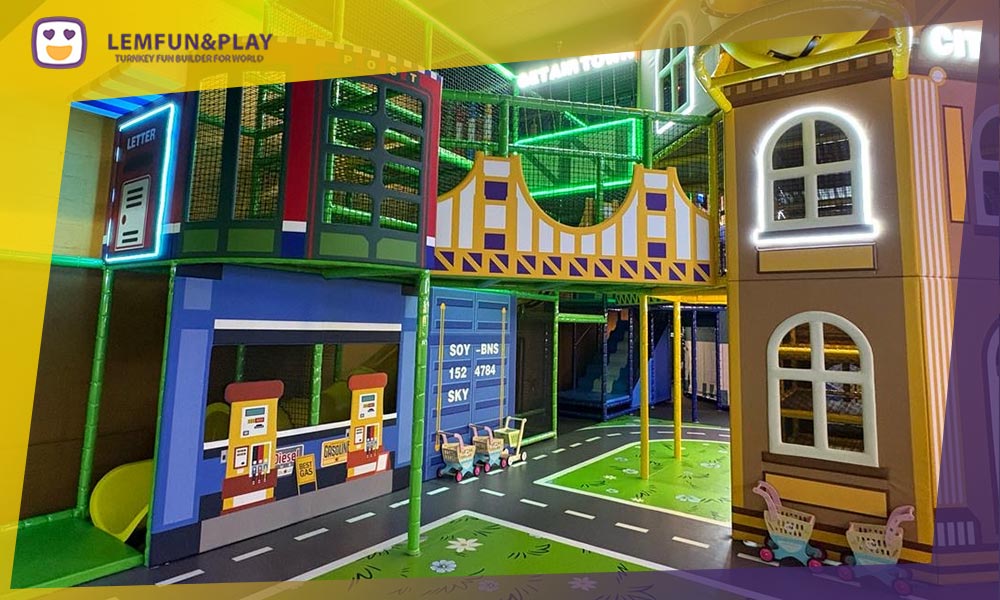
Labor is the apex predator of your profit margin. If you don't manage your staff levels with surgical precision, you are essentially working for your employees. However, the "hidden killers" that most rookies ignore are Liability Insurance and Daily Maintenance. These two items alone typically devour 15% to 25% of your total operating costs.
You cannot skimp on insurance, but you can control your maintenance costs by buying right the first time. To keep labor costs down without turning your playground into a dangerous "Lord of the Flies" scenario, we advocate for a 1:10 or 1:20 staff-to-guest ratio.
Pro Tip for Labor Control:
Safety Training Overhaul: A well-trained staff member is 3x more efficient than a "floor monitor."
Smart Equipment Selection: High-quality gear doesn't just look better; it breaks less. Every hour your facility is closed for repairs is an hour of zero income.
Digital Integration: Use intelligent POS and monitoring systems. If you can automate the check-in and waiver-signing process, you need fewer bodies at the front desk.
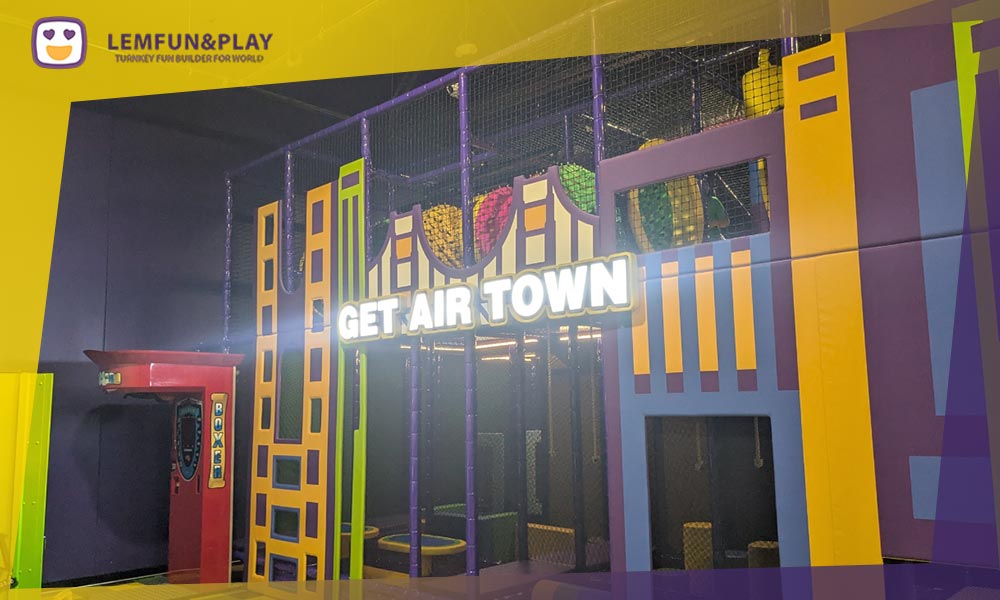
A "busy mall" isn't always a gold mine; sometimes it’s an expensive trap. I once consulted for a client in Norway. On paper, his site was perfect: massive foot traffic, high-income neighborhood. But the shop was tucked away on the edge of the highest floor, a 15-minute walk from the only parking structure.
I told him: "Forget it. Change the location or don't open."
Why? Because a mother with two toddlers and a stroller will not hike through a labyrinthine mall to reach you. Accessibility is the lifeblood of income. We helped him secure a lower-floor unit with direct street and parking access.
Furthermore, you must look at the demographics, not just the numbers. If a report says there are 50,000 people in the area, but 30,000 of them are retirees, your playground is dead on arrival. You need young families. You need a "Goldilocks" zone where parents are looking for a safe "third space" to exhaust their children while they have a moment of peace. We look at traffic "flow," not just traffic "volume."
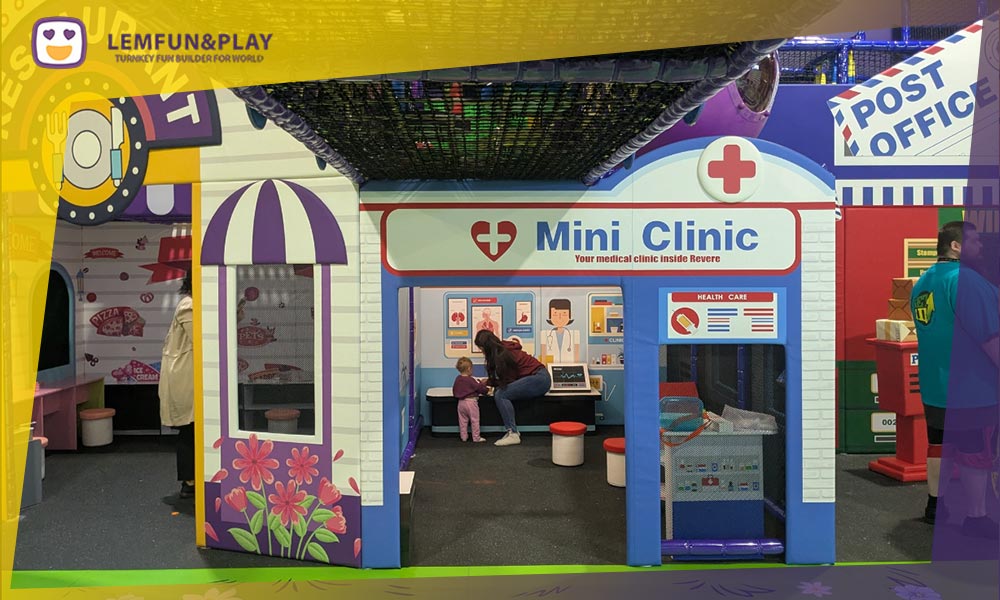
Alt:A custom kids role play house designed by commercial playground equipment manufacturers to increase stay time and typical income earned for an indoor playground.
5. The Romanian Nightmare: Why Fake Certificates Kill BusinessesI recently spoke with a client in Romania who was lured by "factory-direct wholesale prices" from a cut-rate competitor. The price was unbelievably low. They sent him a PDF of an EN1176 certificate. He bought it.
The day before his grand opening, the local authorities did a walk-through. They found the equipment used non-flame-retardant foam and had dangerous "head entrapment" gaps. The certificate was a forgery. The manufacturer blocked him on WhatsApp. He was left with $100,000 worth of junk that he couldn't legally open to the public.
As commercial playground equipment manufacturers, we don't just sell you parts; we sell you compliance. Whether it's ASTM for the US market or EN1176 for Europe, our gear is built to pass. If you save $10k on cheap equipment but lose $200k in potential revenue because you're stuck in "regulatory hell," did you really save money?
What do you do on a Tuesday morning in November when the kids are in school and the park is empty? The "average" operator complains about the weather. The "pro" operator pivots.
Top-tier players use their space for:
Toddler Mornings: Discounted rates for parents of kids not yet in school. This fills the 9 AM - 12 PM slot.
School Field Trips: Bulk-buying of hours by local kindergartens. This is guaranteed, "clean" income.
Corporate Team Building: Believe it or not, trampoline parks and obstacle courses are massive for adult stress relief.
F&B Focus: Turning the cafe into a local hub for remote workers during off-peak hours.
If you don't have a plan for the "off-hours," you are leaving 50% of your potential income on the table. A stagnant room is a liability; an active room is an asset.
7. The Quebec Strategy: Beating FEC Giants with DetailOne of my clients in Quebec was panicked. Two massive Family Entertainment Centers (FECs) opened within 5 miles of his site. They had massive budgets. He wanted to go into debt to buy even flashier gear to compete.
I stopped him. "Don't fight them on their luxury. Fight them on your service."
Instead of a total overhaul, we optimized his soft playground equipment with interactive "low-cost, high-impact" upgrades—think interactive projection games on existing ball pits and trampoline sensors. We focused on his "Small-to-Medium" niche: better service, cleaner facilities, and a superior birthday party package that the big "faceless" FECs couldn't replicate. He stayed profitable while one of the big competitors folded within 18 months due to unsustainable overhead. You win by being the "Local Hero," not the "Budget Clone."
8. Operational Efficiency: The Staffing Ratio SecretIf you want to maximize your typical income earned for an indoor playground, you must master the art of the "Skeleton Crew." This doesn't mean compromising safety—it means maximizing utility.
We recommend a tiered staffing approach. During peak weekend hours, you scale up with part-time college students. During the week, you run a minimal, highly-trained staff. By introducing automated booking systems and digital waiver kiosks, you can reduce your front-desk headcount by 40%. That 40% goes straight back into your net profit.
Investors often ask me: "How long until I have to buy a whole new playground?" My answer: "If you buy from Yommi, you never have to buy a whole new one."
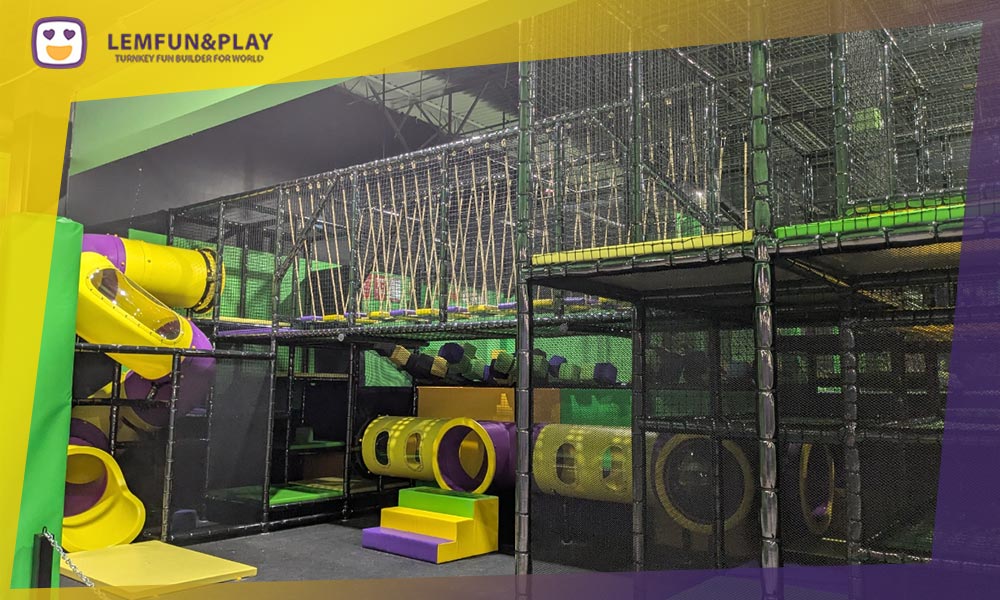
The steel structure of our soft playground equipment is built to last 10 years. The "skin"—the foam covers, the netting, and the themed panels—should be refreshed every 3 to 5 years. This "Modular Evolution" strategy allows you to market a "Brand New Look" to your local community without the $200,000 price tag of a total demolition. You keep the bones, you change the skin. It’s the smartest way to maintain high income while keeping CapEx low.
10. Diversified Revenue: The "Party Room" GoldmineLet's talk about the math of a birthday party. A typical party package for 15 kids costs between $300 and $600 for a 2-hour slot. Your direct costs (pizza, juice, a staff "host") are roughly $50. That is a 90% gross margin.
Successful playgrounds often run 10-15 parties per weekend. Do the math. That’s $4,500 - $9,000 in revenue from just one room in two days. If you aren't prioritizing your party room design and marketing, you are essentially burning money. We design our party rooms to be "Instagrammable" because free social media marketing from happy parents is the most powerful growth engine in existence.
No. Secondary consumption is the oxygen of your business. My Experience: Your ticket sales are your "defense"—they pay the rent, the power, and the basic staff. Your snack bar, coffee shop, and merchandise are your "offense"—that is the money you actually take home. I’ve seen playgrounds double their net profit simply by upgrading their coffee machine and offering high-quality healthy snacks. If you aren't selling food, you are literally giving money to the Starbucks down the street. Every parent sitting in your venue is a captive audience with a wallet. Use it.
Only if the math supports it. Shiny objects don't pay the bills; throughput does. My Experience: I’ve seen owners spend $50,000 on a single "hero" attraction that only 2 kids can use at a time. It creates a line, frustrates parents, and doesn't increase revenue. I recommend focusing on "high-capacity" innovation. At Yommi, we prioritize designs that move kids through the system effectively while keeping them engaged. Don't buy a Ferrari if you need a bus to move the crowd. Innovation must serve the ROI, not the owner's ego.
No. Smart design allows for "thematic refreshes" instead of total replacements. My Experience: You shouldn't be tearing out your steel frame every few years. That’s a waste of capital. We design our soft playground equipment with "modular aesthetics." By swapping out PVC covers, adding new interactive wall panels, or changing the decorative "skin" of a slide, you can make the park look brand new for 10% of the cost of a full renovation. Keep your "bones" strong and change your "skin" every 3-5 years to stay fresh.
Never. A low purchase price is often a down payment on future disasters. My Experience: The "wholesale" price usually means the manufacturer cut corners on the density of the foam, the thickness of the steel, or the quality of the safety netting. I’ve seen "wholesale" netting snap in six months, leading to a lawsuit that cost the owner 10x what they "saved" on the purchase. Buy from a manufacturer that values their E-E-A-T (Experience, Expertise, Authoritativeness, and Trustworthiness). In this industry, cheap is expensive.
Differentiate or Die. Don't join a race to the bottom on price. My Experience: When a competitor opens, rookies drop their prices. This is a death spiral. Instead, increase your value. Offer a "VIP" membership, improve your cleaning standards (parents notice!), or host exclusive community events. If the guy next door is "cheap and dirty," you be "premium and pristine." Quality parents will always pay more for safety and cleanliness. Your "income" is protected by your reputation, not your discount.
Marketing and Customer Acquisition. You can't just build it and hope they come. My Experience: Most owners spend 100% of their budget on equipment and 0% on telling people they exist. You need to set aside at least 10% of your initial investment for a "Grand Opening" blitz. Google Ads, local influencer partnerships, and Facebook groups are where your "typical income" is actually generated in those critical first 6 months.
Preventative Action. If you wait for it to break, it's already too late. My Experience: My most successful clients have a "Daily Safety Checklist." They spend 15 minutes every morning checking the zip ties, the netting tension, and the foam integrity. Small repairs cost $10. Big repairs, caused by neglecting small ones, cost $10,000 and a closed facility.
Only if you have a veteran partner. The learning curve is made of concrete. My Experience: The indoor playground business looks "easy" from the outside. It isn't. From fire codes to staff management to food safety, there are a thousand ways to fail. This is why we don't just sell equipment; we provide the SOPs (Standard Operating Procedures) our clients need to survive. Don't go in blind.


We use cookies to enhance your browsing experience, serve personalized ads or content, and analyze our traffic. By clicking "Accept All", you consent to our use of cookies.
