
Get You Updated on Playground Equipment News.
Let’s get one thing straight before you read any further: I am not a broker, a franchise salesman, or a marketing agency fluff-writer trying to paint a rosy picture of easy passive income. I run Lemfun, a high-end indoor playground manufacturer with 15 years of boots-on-the-ground manufacturing and global export experience. I have seen hundreds of investors step into this industry. Some hit break-even in under a year and now run multi-location empires; others got absolutely crushed because they miscalculated a single fire code or built in a commercial dead zone.
If you are asking yourself, is a trampoline park profitable?, the short answer is yes. It remains one of the highest-yield investments in the commercial entertainment sector. But the long answer requires looking closely at the cold, hard operational math, manufacturing standards, and floor planning traps that separate the rich owners from the bankrupt ones.
Here is the raw, unvarnished industry reality.
If a manufacturer tells you that you will recoup your entire investment in three months, hang up the phone. They are lying to get your deposit.
Based on 15 years of factory export data for mid-sized facilities ranging between 1,000 to 1,500 square meters, the ideal, realistic payback period is 6 to 12 months.
When I talk about the "break-even point," I am using a strict ROI calculation model. This is the exact moment where your total initial expenditure—which includes the base equipment price, international ocean freight, local customs duties, import taxes, and facility build-out costs—is completely offset by your net operational accumulation.
Why do some owners hit this milestone at month 6 while others drag out to month 18? It comes down to managing your major variables. The cost of steel and soft padding from my factory is a fixed upfront number. The real wildcards that dictate your payback timeline are your local labor costs and your marketing efficiency. If you open your doors expecting organic foot traffic without an aggressive local marketing budget, or if you overstaff your floor during low-occupancy weekdays, your margins disappear. Control your operational variables, or they will control your expiration date.
2. The Golden 6:4 Layout Rule: Why Relying on Ticket Sales Alone is Financial SuicideNew investors always make the same fatal mistake: they look at their raw floor plan and want to cram 100% of it full of trampolines. They think more jumping mats equal more ticket sales. That is amateur logic.
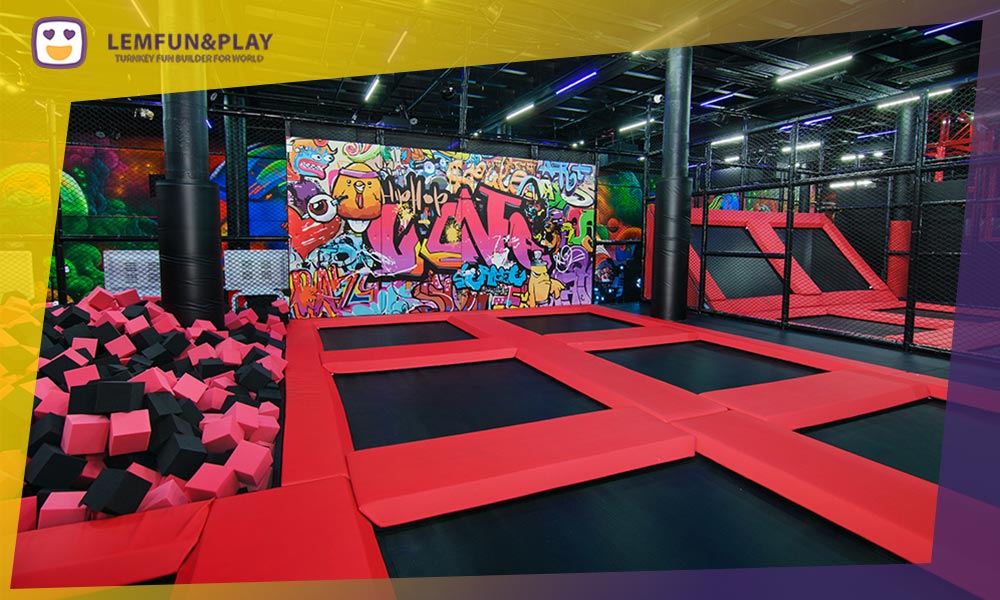
If your play area takes up your entire building, your business will fail. To run a highly profitable commercial trampoline park, you must strictly enforce a structural ratio between 6:4 and 7:3 between the play zone and the non-play zone.
Play Zone (60% – 70% of floor space): High-visibility attraction, ticket generation, foot traffic hook. This covers your baseline operations.
Non-Play Zone (30% – 40% of floor space): F&B lounge, party rooms, merchandise retail, parents' seating. This is your 30% net income driver.
The play zone is simply the hook that gets people through the front door. The real profit—the money that shortens your payback period—is generated in the non-play zone through secondary spending.
I remember a client from Canada who called me, deeply stressed during his site planning phase. He said, "My local market has three major competitors. They are all slashing ticket prices to win customers. If I enter a price war on admission, I won't survive. How do I build a moat around my business?"
I gave him two blunt pieces of advice:
Change the Business Model: Stop thinking like a ticket booth. You are an event hosting business. You need to leverage group bookings, corporate team-building events, and tiered membership models that lock in upfront monthly capital and drive up customer retention.
Architectural Monetization: We revised his floor layout completely. We designed a dedicated food and beverage zone with a fully functioning kitchen, a retail shop exclusively selling high-margin custom grip socks and branded merchandise, and three isolated private party rooms for birthdays.
The result? His competitors are still fighting over 15-dollar open-jump tickets while he is booking out 500-dollar birthday packages every single weekend. The tickets cover his baseline overhead; the food, socks, and parties build his wealth.
When clients look at our initial financial projections and then come back to me months into operations asking, "Why are my net margins tighter than the prospectus suggested?" I always point them straight to their operational expenditure (OPEX) logs. You aren't losing money on macro-metrics; you are bleeding cash through invisible micro-drains.
The first major culprit is vampire utility consumption. A 1,500-square-meter facility requires massive amounts of climate control, industrial ventilation, and high-intensity overhead lighting. I see owners keeping their entire park fully lit and every electronic system running at maximum load during dead Tuesday morning hours. That is pure cash burning into thin air.
The second killer is micro-attrition neglect. Foam pit cubes tear. Ocean balls crush. High-wear soft PVC wrapping scuffs, and internal lighting components degrade.
If you do not factor in the continuous wear and tear of these minor components, they will aggregate into a major capital drain. More importantly, worn-out components look cheap, and parents will not bring their kids back to a run-down park. The best way to mitigate this cost is simple: buy higher-quality, commercial-grade materials upfront. Paying 15% less for low-grade foam and thin vinyl from an unverified manufacturer means you will pay 300% more in rolling replacement costs over the next two years.
4. Ceiling Height Reality Check: 4.5m vs. 6m and the Danger of the ZiplineCan you build a trampoline park with a clear ceiling height of 4.5 or 5 meters? Yes, I have manufactured equipment for dozens of sites with these exact constraints. But you need to understand the structural compromise.
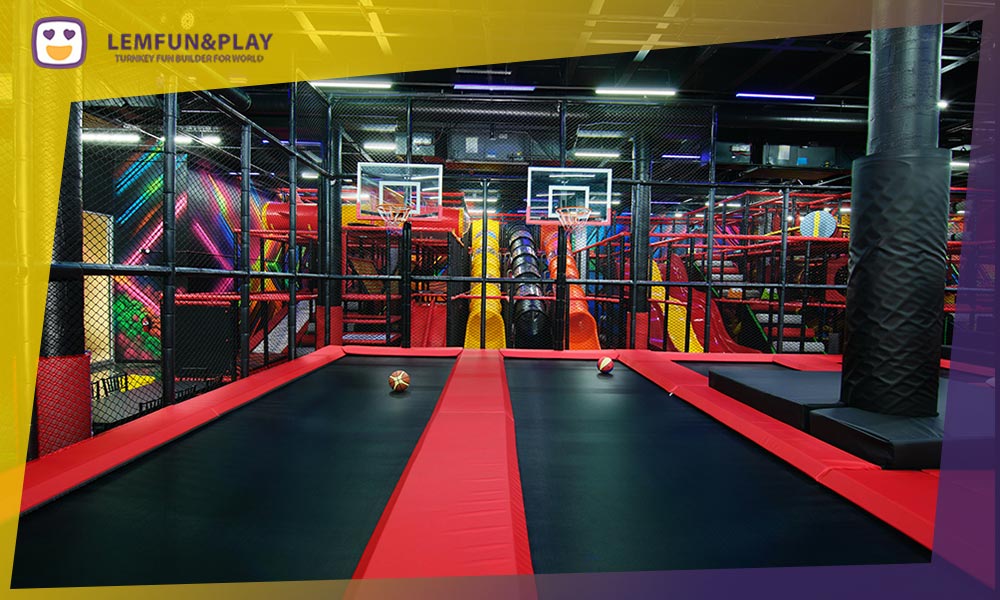
If your facility has a low clearance of 4.5 meters, you are immediately disqualified from installing high-performance Olympic-grade trampolines, professional dodgeball zones, or elevated ropes courses. For a standard commercial layout, our engineering team requires a 6-meter clear height from the finished floor to the lowest obstruction (like HVAC ducts or structural beams).
We allocate 1 to 1.2 meters for the steel support framework and sub-structure underneath the jumping beds. Another 3 to 4 meters are consumed by the structural safety enclosure netting and standard jumping clearance. Any remaining overhead space is your buffer for high-altitude attractions.
If you try to cheat these metrics with high-velocity attractions like a commercial Zipline, you are playing with fire. Ziplines are highly dynamic systems with strict slope and sag requirements:
The Slope Trap: To ensure riders actually slide from point A to point B without stalling, the steel cable requires a mandatory drop slope of 3% to 6%. If your clear height is restricted to 6 meters over a long span, that drop means the end of the line will sit incredibly close to the floor. Your riders' legs will slam into the ground or safety mats at high speeds.
The 1.8m Clearance Rule: A zipline requires an absolute minimum safety clearance zone of 1.8 meters (6 feet) below and to the sides of the entire flight path. You cannot put a single piece of other equipment, a walkway, or a human being inside that envelope. If your ceiling height is low, a zipline effectively sterilizes a massive chunk of your revenue-generating floor space.
Your entire business model relies on two primary mechanical elements: the jumping mat and the tension springs. If either fails, that attraction goes offline, and an offline attraction generates zero dollars while ruining user experience.
When you purchase from low-cost, unverified factories, their mats use cheap polypropylene weaves that stretch out within 12 months, and their springs lose tensile memory or snap under continuous heavy cycles. At Lemfun, we use heavy-duty, UV-resistant, commercial-grade jumping mats paired with specialized manganese-alloy galvanized springs. Under standard operating conditions, our core components maintain their structural integrity for more than 5 years.
However, you must plan for peak traffic stress. If your venue is highly successful, the sheer volume of impact cycles during weekend rushes will accelerate component wear. As a professional manufacturer, my explicit rule for your financial planning is this: You must maintain a liquid cash reserve equal to 10% to 15% of your initial equipment purchase price exclusively for ongoing preventative maintenance.
Do not use this cash for marketing or payroll. Keep it locked away so that when a safety pad needs replacing or a group of springs needs swapping, your floor manager can resolve it instantly without impacting your park's operational uptime.
6. Slashing Your Commercial Insurance Premium at the Factory LevelLet's talk about the elephant in the room: liability. In the United States and European markets, commercial liability insurance is not just a legal requirement; it is one of your heaviest, most painful recurring operational expenses. On average, insurance premiums will devour 6% to 10% of your annual gross revenue.
Before an underwriter writes your policy or quotes your premium, they will perform a comprehensive risk audit. They look at your clear heights, your traffic flow patterns, your emergency exit access, and your equipment certification papers. If your site looks like a DIY project or uses uncertified import gear, they will either deny you coverage entirely or quote a premium that completely destroys your profit margins.
We attack this operational expense directly from the manufacturing plant floor. To minimize your liability risk and drive down your insurance premiums, our production lines fabricate equipment to meet the highest international safety thresholds:
Extra-Thick EPE Safety Padding: Our soft padding is significantly thicker than the industry baseline, utilizing closed-cell foam that does not absorb moisture or lose its impact-damping shape.
High-Density Enclosure Netting: Our safety interlocks use fine-mesh, anti-climb netting that prevents small fingers from getting caught or tangled.
Certified Structural Steel: Every piece of structural steel leaving our facility carries full ASTM (American) and EN1176 (European) compliance certifications.
When you hand your insurance underwriter a blueprint stamped with certified ASTM and EN1176 safety metrics, you present a highly managed risk profile. That translates directly into lower premiums and thousands of dollars saved annually.
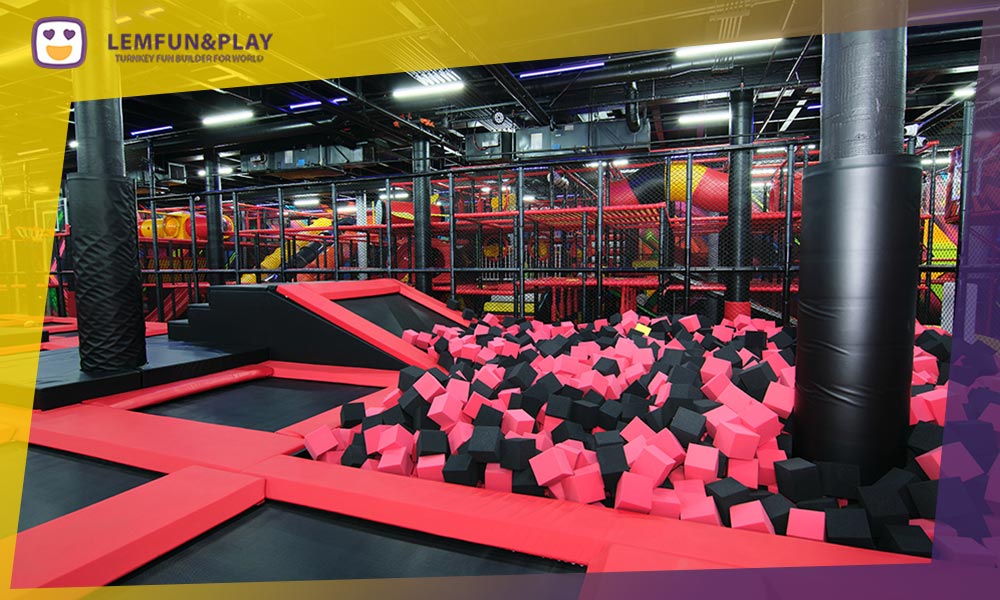
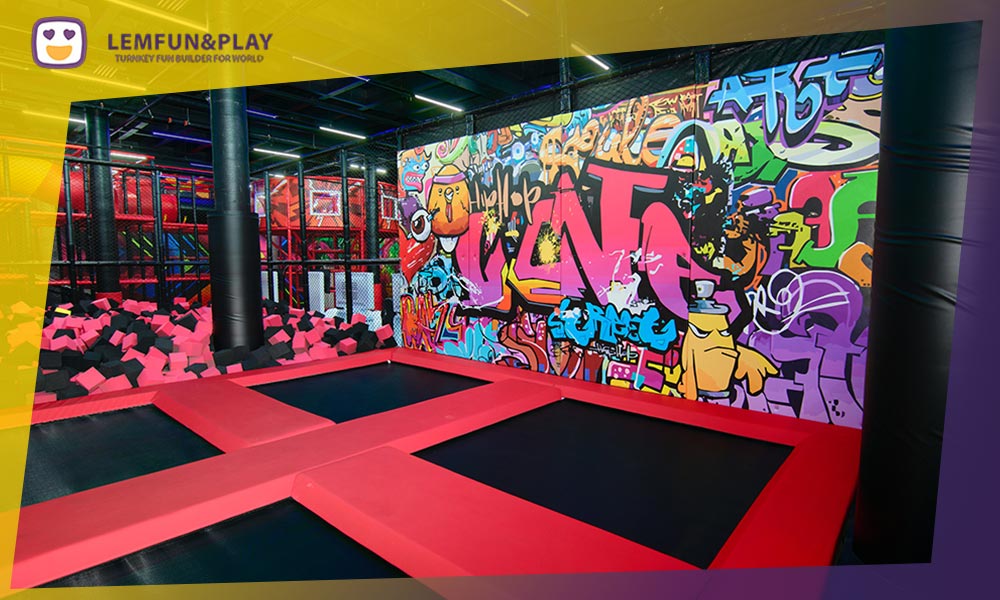
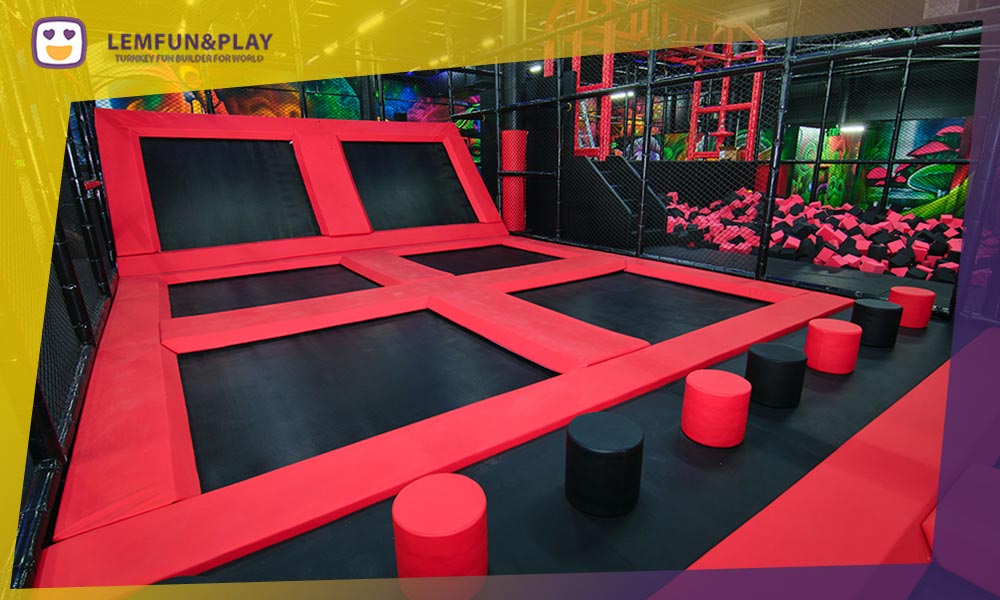
The days of opening a warehouse with nothing but a grid of square trampolines and surviving on that alone are completely over. In mature markets like the US, Canada, and the UK, a "pure trampoline park" is a relic of 2015. It lacks the long-term novelty to keep kids coming back, and it cannot compete with modern multi-attraction venues.
To survive and dominate today, your venue must evolve into a comprehensive Family Entertainment Center (FEC). You need a diverse mix of high-margin, low-maintenance attractions that appeal to varying age groups and skill levels. We are actively manufacturing and deploying three specific modules to help clients boost their average spend per head:
Multi-Tiered Ninja Warrior Courses: High-throughput obstacle tracks that drive repeat visits through gamification and time-trials.
Integrated High-Altitude Climbing Walls: Vertical attractions that maximize your vertical ceiling space without occupying a massive footprint on your valuable floor.
Gamified Interactive Trampoline Systems: Merging physical jumping with digital projection screens to capture the screen-addicted demographic.
Consider our recent project execution in Manchester, UK. The investor knew the local market was saturated with basic jump arenas. Instead of building a traditional park, we worked with them to create a highly optimized social ecosystem. We integrated a multi-level ninja challenge course and a high-capacity climbing zone, then explicitly built a premium cafe bar with high-end seating directly overlooking the play floor.
The parents don't just sit on cheap plastic chairs waiting for their kids to finish jumping; they sit in a comfortable, upscale lounge, ordering premium espresso and food while watching their children play. This layout successfully transformed a standard physical play space into a highly profitable local community hub, drastically increasing the facility's average dwell time and secondary profit margins.
8. Benchmark Metrics: The Passing Grade for Revenue per Square MeterIf you want to know if your park is operating efficiently, you need to look at your real estate yield. In our internal tracking models, a well-managed commercial indoor facility must generate between 150 USD and 300 USD per square meter annually to receive a passing grade. If your revenue falls below 150 USD per square meter, your space is underutilized, or your pricing structure is broken.
How do our highest-performing operators break through this baseline and hit the 300 USD / sqm mark? They use two specific strategies:
Multi-Revenue Fleet Transformation: They treat their space as a flexible asset. If you only rent out floor time for open jumping, you are operating at the lowest possible yield level. High-margin facilities integrate structured, recurring revenue programs into their weekly schedule. This includes running specialized fitness classes on the trampolines during quiet morning hours, launching professional gymnastics or ninja training academies, and hosting organized local dodgeball leagues on weekday nights.
Dynamic Space Optimization: They don't let dead space sit empty. Every square meter must earn its keep. If a specific corner of the park isn't drawing active traffic, top operators reconfigure it with high-density, low-overhead attractions—such as arcade ticket-redemption games or self-service party booths—that maximize hourly throughput without requiring additional floor staff.
Every inexperienced investor assumes that securing a lease inside a massive premium shopping mall is the ultimate golden ticket. They see high foot traffic numbers and assume it automatically guarantees profitability. This is a massive trap.
High-end shopping malls come with exorbitant rent costs per square meter, extremely strict operating hours, rigid remodeling restrictions, and highly complex loading dock and installation limitations. More importantly, they often force you into upper-level or corner units that can severely cripple your accessibility.
When we evaluate a prospective property, we use a strict deduction-based system rather than focusing solely on raw foot traffic. If a location lacks clear visibility from major access roads, forces clients to navigate complex mall corridors, or does not provide a dedicated, free parking lot capable of handling large weekend birthday crowds, it receives a deduction.
I had a client from Louisiana who came to Lemfun with a signed letter of intent for a lease inside a premium multi-story commercial mall. He wanted us to begin designing a custom layout for the space immediately.
After reviewing his site plans, I stopped our design team and told the client to reconsider. The space the mall offered him was tucked into the furthest corner of the highest floor, completely isolated from the mall’s primary ground-level entrance and a substantial distance away from the main multi-level parking garage.
I looked at him and said, "Think about a mother trying to wrangle four excited kids or transport heavy birthday gifts and party supplies across a massive mall layout, up multiple elevators, just to reach your entrance. The friction is way too high. If you build here, you are starting with a major disadvantage."
He trusted my advice, broke off the negotiations, and secured a clean, high-ceiling warehouse conversion down the street. It sat right next to a major highway intersection, featured a massive ground-level parking lot, and cost him less than half the rent per square meter of the mall space. He opened with a significantly lower overhead, immediate visibility, and zero guest friction—and his weekend attendance numbers broke local records.
No. Cheap gear kills your margins through downtime. My Experience: If your plan is to source the cheapest possible steel, thin padding, and uncertified nets to save a few bucks upfront, do not enter this industry. Cheap equipment degrades rapidly under commercial wear, leading to frequent operational shutdowns and costly emergency replacements. More importantly, it creates massive safety vulnerabilities that expose you to catastrophic legal liabilities. Invest in certified, commercial-grade equipment upfront, or do not build at all.
Yes. Customs will seize uncertified materials instantly. My Experience: If you attempt to import commercial amusement park equipment into the US or UK without verified, laboratory-stamped fire retardancy documents that match local regulatory codes, customs authorities will seize your container at the port. You will face heavy daily storage fees while your project timeline grinds to a halt. At Lemfun, we offer specialized material upgrades that increase standard cost structures by 30% to 60% depending on your local district codes. We ensure your documentation is entirely bulletproof before the ship ever leaves port.
Only if you choose the wrong product mix. Low ceilings require high-density, low-profile games. My Experience: A 5-meter clear height will prevent you from installing high-altitude attractions like professional performance trampolines, high ropes courses, or long-span ziplines. However, you can still run a highly profitable facility by pivoting your product mix toward high-density, low-profile attractions. This includes custom ninja obstacle courses, low-altitude junior adventure zones, soft toddler play areas, and interactive digital floor games. Work within your structural constraints instead of trying to force high-clearance games into a low-clearance building.


We use cookies to enhance your browsing experience, serve personalized ads or content, and analyze our traffic. By clicking "Accept All", you consent to our use of cookies.
