
Get You Updated on Playground Equipment News.
You want to know exactly how to open an indoor playground in usa? Let me give it to you straight. The US market is incredibly profitable, but the water is deep, and the regulatory traps are deadly. The local Fire Marshal and the City Building Department do not care about your grand business dreams. If your imported equipment fails their safety inspection, your business is dead before it even opens its doors.
I have spent the last 10 years deep in the trenches of the indoor playground manufacturing industry. I have seen ambitious American investors lose hundreds of thousands of dollars, face eviction, or go bankrupt simply because they bought cheap equipment from a smooth-talking trading company that provided fake certificates. They thought they were getting a great deal, only to have a city inspector red-tag their entire facility.
Today, I am putting all my cards on the table. As a veteran source factory manufacturer who actually builds this equipment from raw steel and foam, I am going to show you exactly how to survive the brutal US regulations, avoid the catastrophic traps, and build a high-margin money-making machine.
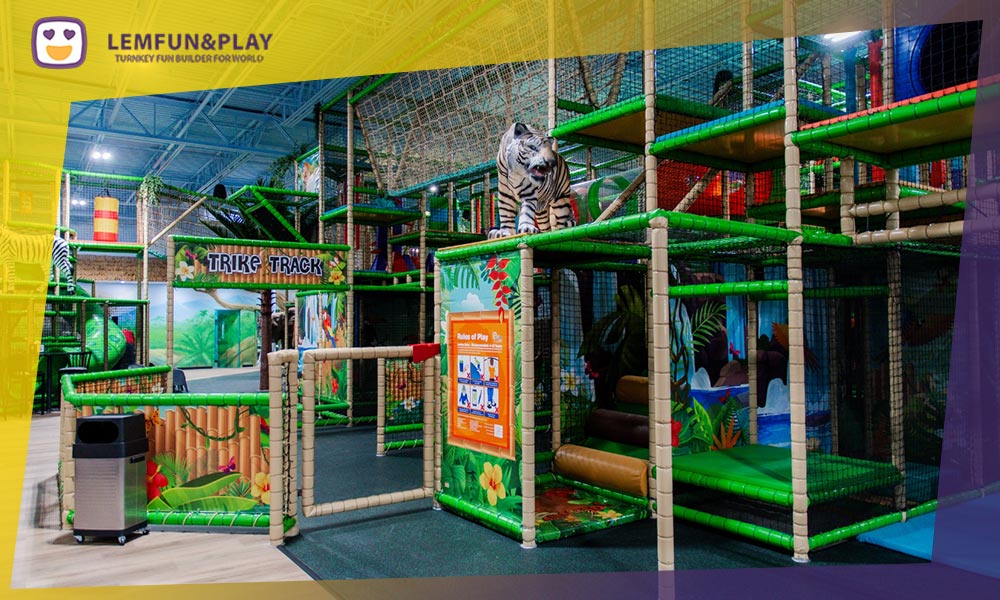
Let us talk about the absolute biggest roadblock in the US market: Fire compliance. Standards like NFPA 701, ASTM E84, and stringent local codes are non-negotiable. If you are opening a facility in California, you are also facing TB 117-2013, a brutally strict regulation that heavily limits the use of toxic chemical flame retardants while simultaneously demanding extreme fire resistance from your materials.
Low-quality peers in my industry love to cut corners here because you, the buyer, cannot easily see the difference on a quotation sheet. They use cheap foam tubes, uncertified PVC vinyl covers, and untreated wooden platforms to drop their prices. What is the result? The US fire inspector walks into your nearly finished park, holds a lighter to your foam padding or asks for the raw material test reports. Your cheap foam melts instantly. You have no paperwork. Your playground is immediately condemned.
To pass these inspections, my factory strictly controls the raw material supply chain. We treat our platform wood to meet specific fire ratings. We extrude our high-density foam padding to be self-extinguishing. When the inspector asks for the paperwork, you hand them legitimate lab testing reports.
The 18-Inch Sprinkler Death Trap (The New Mexico Case)
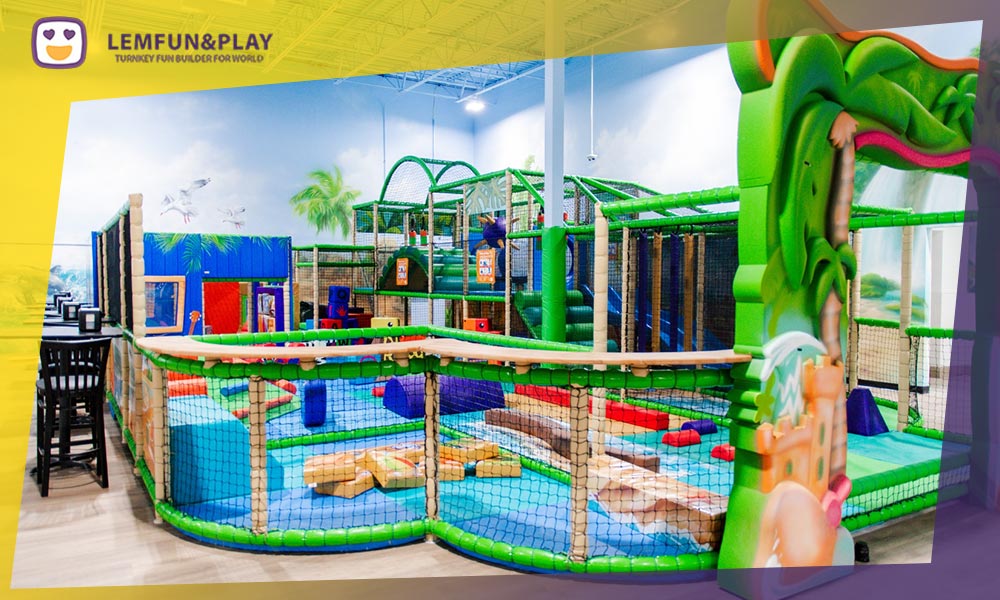
Material flammability is only half the battle. The physical dimensions of your equipment dictate whether you pass the fire code. In the US, you must maintain a strict minimum clearance of 18 inches between the absolute top of your playground structure and the ceiling, or specifically, the fire sprinkler heads.
I had a client from New Mexico who excitedly emailed me his warehouse floor plan. He was ready to sign a massive commercial lease to build his second indoor playground location. He said, "Give me a design immediately, I am ready to pay."
We stopped him. We demanded to see the vertical elevation plans and the current fire system layout. We analyzed his site and found two massive red flags that would have bankrupted him. First, the warehouse had no existing commercial sprinkler system. Retrofitting a sprinkler system into a commercial warehouse in the US costs tens of thousands of dollars. Second, the ceiling height was only 10 feet.
Let us do the math. You take a 10-foot ceiling. You subtract the mandatory 18-inch fire clearance. You subtract the thickness of the floor mats. Our equipment would barely have 8 feet of vertical space. It would be impossible to install a multi-level structure, rendering the business model completely unviable.
We told him the hard truth: "Do not sign this lease. Find a new building." He cooled down, realized we just saved him from a disastrous financial commitment, and walked away from the landlord. Never buy a design before you measure your clearance.
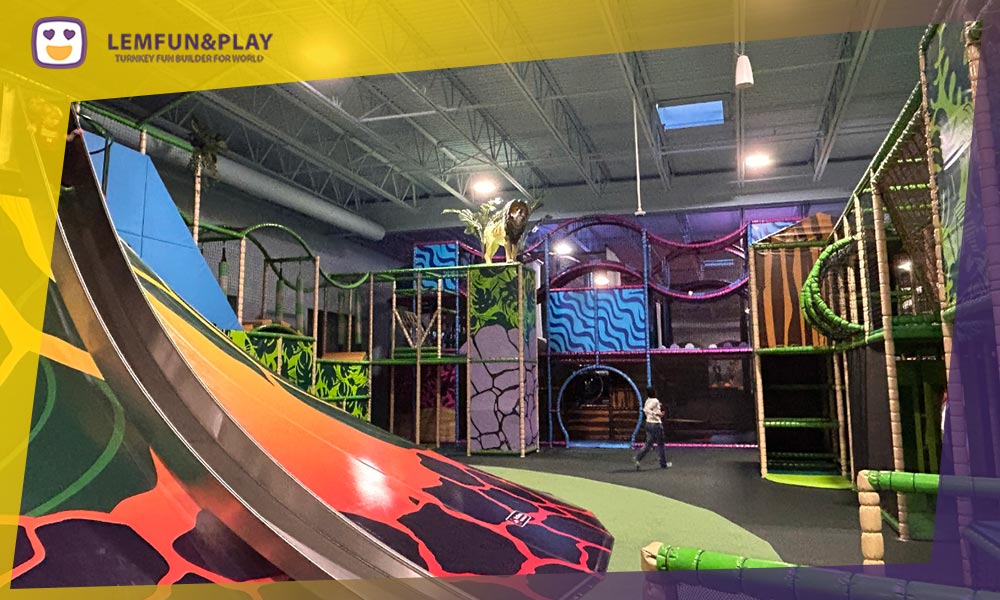
You absolutely cannot bypass the Americans with Disabilities Act (ADA) when opening an indoor play center in the US. The law mandates that your facility must be accessible. However, if your manufacturer does not understand American architecture, their poor design will eat up your most profitable play areas with massive, clunky wheelchair ramps and dead space.
Our approach to ADA compliance is aggressive but legally bulletproof. We do not just slap a ramp on the side of a structure and call it a day. We integrate accessible routes directly into the main traffic flow of the playground.
When my design team creates your layout, we strictly control the ramp slope ratios (typically 1:12) and ensure the ground flatness meets federal standards. We design transfer stations that allow children with mobility challenges to engage with the equipment naturally. By weaving the ADA requirements into the core play routing, we ensure you pass the city inspection on the first try without sacrificing the dense, high-ROI footprint that kids actually want to play in. We make your park inclusive, legally compliant, and highly profitable.
3. Spotting Fake Certificates and Slashing Your Liability Insurance
Liability insurance for US indoor playgrounds is absurdly expensive. You will pay massive premiums every month. Why? Because accidents happen constantly when investors buy garbage equipment. Insurance companies know this, and they will punish you financially if you cannot prove your equipment is top-tier.
Right now, there are hundreds of Chinese trading companies that will send you an ASTM F1918 certificate to win your order. Let me tell you an industry secret: a massive percentage of these certificates are completely fake. They are Photoshopped.
Here is my one-second trick to expose a liar: When a supplier sends you a certificate, look at the certification body (like TÜV, SGS, or Intertek). Go directly to their official website and type in the certificate number or the exact Manufacturer Name printed on the PDF. If the database shows no record, or if the manufacturer name does not exactly match the company taking your money, it is a fake. Run away immediately.
To help you secure lower insurance premiums, we upgrades the core safety structures beyond standard requirements. Our production department uses significantly thicker padding to prevent blunt force injuries. We use tighter, high-tensile netting with smaller apertures to completely eliminate the risk of finger or button entrapment. We design layouts with zero blind spots, giving parents and your staff a clear line of sight to every corner of the park.
Our equipment holds genuine ASTM, EN1176, and CSA safety certifications. When you hand these real documents to your American insurance broker, you prove that your facility is built like a fortress. This directly reduces your perceived risk and lowers your monthly premiums.
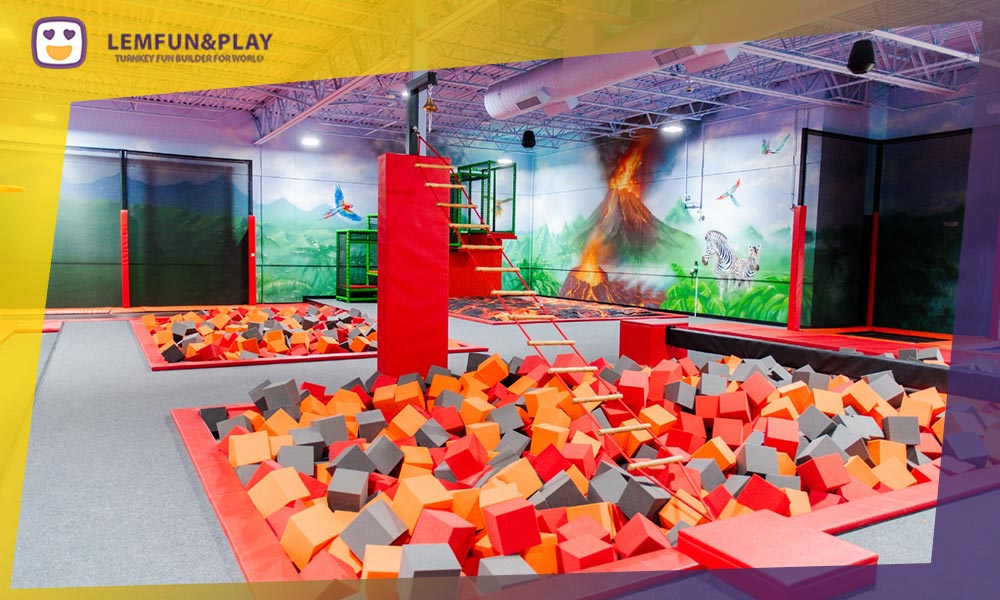
A client from Florida recently came to me with a 6,000 square foot floor plan. He asked me a very common, very dangerous question: "Is selling entry tickets my only income? How do I actually make money fast?"
If you only sell general admission tickets, you will struggle to survive the slow weekdays. You need a better business model. I gave him two harsh facts and a complete redesign strategy.
First, you must change your operational mindset. An indoor playground is not just a room with slides. It is a community hub. You need to drive group sales, offer VIP tier memberships to guarantee recurring monthly revenue, and host specialized toddler mornings to fill the dead hours on Tuesday and Wednesday mornings.
Second, your floor plan dictates your bank account. We took his 6,000 square feet and completely restructured it. Instead of just filling the entire room with a giant climbing frame, we carved out three distinct zones.
The Ticket Zone: A high-density active play area to justify the door price.
The Arcade & F&B Zone: A dedicated rest area with food service and a pay-to-play arcade section. This captures secondary spending from parents who are waiting for their kids.
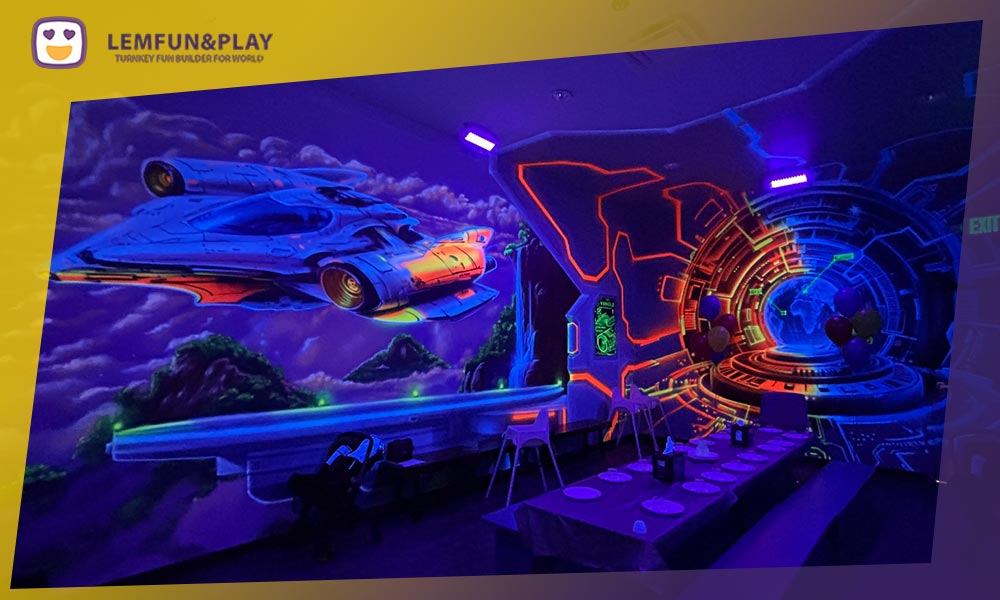
The Party Rooms: This is the golden goose. We designed three modular party rooms.
Why party rooms? Because when you are looking for a kids indoor game zone for sale, you are not just buying plastic and steel. You are buying a revenue system. A birthday party allows you to charge $400 to $800 for two hours of dedicated space. You sell the pizza, you sell the cake, and you secure guaranteed weekend revenue months in advance. We design the layout to physically funnel the foot traffic toward these high-margin zones.
5. State-by-State Headaches and The Portland Installation Rescue
Do not treat the United States as one single market. It is a collection of 50 different regulatory nightmares. What works in Texas will get you heavily fined in California.
California codes are brutally strict regarding seismic activity and structural integrity. For our California projects, we do not use our standard global framework. We physically upgrade the steel. We use significantly thicker galvanized steel pipes and heavier joint clamps to meet strict earthquake safety demands. We use smaller mesh netting. If you buy a generic setup intended for a loose-regulation state and try to install it in Los Angeles, the building inspector will force you to tear it down. We engineer for the specific zip code.
The Installation Reality
You buy the equipment. Now, who builds it? Can we send our elite Chinese installation engineers to the US to assemble it for you? Yes, we offer that service. But here is the reality of the US market: Visas get denied, and local labor unions can create massive friction.
A client in Portland bought a massive 4,000 square foot indoor playground from us. The manufacturing was perfect. The ocean freight was smooth. The containers arrived at his door. But right before the installation date, our lead engineer’s US visa was inexplicably rejected by the embassy.
Did the client panic? No. Because a real factory always has a contingency plan. We immediately refunded the client’s entire installation fee. But we did not abandon him. We took his exact 3D design and spent three days shooting highly detailed, custom video tutorials on our factory floor, showing exactly how to assemble his specific custom joints and complex slides.
We generated a massive, idiot-proof engineering blueprint. Then, we connected him with a local US contracting team we had successfully collaborated with in the past. We provided 24/7 video call support during his installation. He passed his structural inspection and opened exactly on schedule. If you buy from a trader, and the visa fails, you are left with a pile of steel and zero support. We never leave you stranded.
You have navigated the fire codes. You have survived the ADA requirements. Your equipment is fully installed, tightened, and cleaned. Now you face the final boss of the US market: The Certificate of Occupancy (CO).
This is the official piece of paper from the city government that legally allows you to open your doors to the public. I have seen investors sit on fully built playgrounds for four, five, or six months, bleeding rent money, completely unable to open.
Why does this happen? Because the city inspector suddenly demands a highly specific heavy-metal toxicity report for the PVC vinyl, or a tensile strength test for the netting. The investor frantically calls their cheap supplier. The supplier, who is just a middleman, calls the five different random workshops they bought the parts from. Nobody has the paperwork. The delay kills the investor's cash flow.
This is exactly why you must work directly with real, established indoor play area manufacturers. We manufacture 80% of our equipment entirely in-house. We maintain absolute control over our raw material supply chain. We hold the actual, physical ASTM reports in our filing cabinets.
When your city inspector decides to be difficult and demands an obscure material certification on a Friday afternoon, you call me. We pull the file, we stamp it, and we send you the exact documentation you need to satisfy the city. We clear the bureaucratic path so you can finally open your doors, welcome your customers, and start making your return on investment.
Q: Can I just buy the equipment first, import it, and figure out the fire codes with the local city inspector later?
No. Your equipment will be red-tagged, dismantled, and you will lose your entire investment.
My Experience: City inspectors in the US absolutely do not compromise. They do not care how much money you spent. If your foam, netting, and wood do not have the proper fire-retardant test reports (like NFPA 701 or ASTM E84) before you begin installation, you will have to tear every single pipe down. We provide the certified materials and the exact paperwork you need before the cargo container even leaves our factory in China. Do not gamble with the Fire Marshal.
Q: Is it mandatory to hire your Chinese engineers to install the playground in the US? What happens if they can't come?
Only if you want to, but local union rules, strict local contractor laws, and visa risks often make it impractical.
My Experience: I have seen US embassy visa rejections delay a client's project for months, bleeding them dry on rent. Instead of forcing you to rely on our physical presence, we provide extremely detailed, 3D CAD engineering blueprints and custom installation manuals. If our engineer gets denied a visa, we instantly shift to our backup protocol: we guide your local licensed US contractors via daily video calls to get the structure built fast, safely, and entirely legally within your local jurisdiction.
Q: Will the ADA (Americans with Disabilities Act) requirements force me to lose half of my profitable play space to giant ramps?
No. Smart, aggressive engineering turns legal accessibility into a structural advantage.
My Experience: Clunky, amateur design wastes expensive commercial space. We integrate ADA-compliant ramps (strict 1:12 slope ratios) and flat wheelchair transfer stations directly into the core play routing. This ensures you pass the strict city inspection without sacrificing the dense, high-ROI, vertical play events that kids actually want to climb on. We keep your floor plan legal and highly profitable.


We use cookies to enhance your browsing experience, serve personalized ads or content, and analyze our traffic. By clicking "Accept All", you consent to our use of cookies.
