
Get You Updated on Playground Equipment News.
A brutally honest guidance from a Project Steward with 10 years in playground industry is the key for these time-poor investors.
I’m Bob, from Lemfun.I have spent over 10 years deep in the playground equipment industry. I have read dozens of so-called "perfect business plans" . Most of them usually feature stunning 3D renderings and a increadible ROI spreadsheet. According to those sheets, you just install the playground, and the cash will automatically fills up the ball pool.If you are an investor with money but have no time time, those plans are always traps.
As a professional Turnkey Solution Provider, I know that a real business plan is absolutely not a sales tool to trick you into spending money. It more like a "Pre-Game Sandbox" for your project. Today, I’m not going to give you any generic definitions you can find on Wikipedia. We are going to talk about money, risk, and how to write a practical indoor playground business plan.
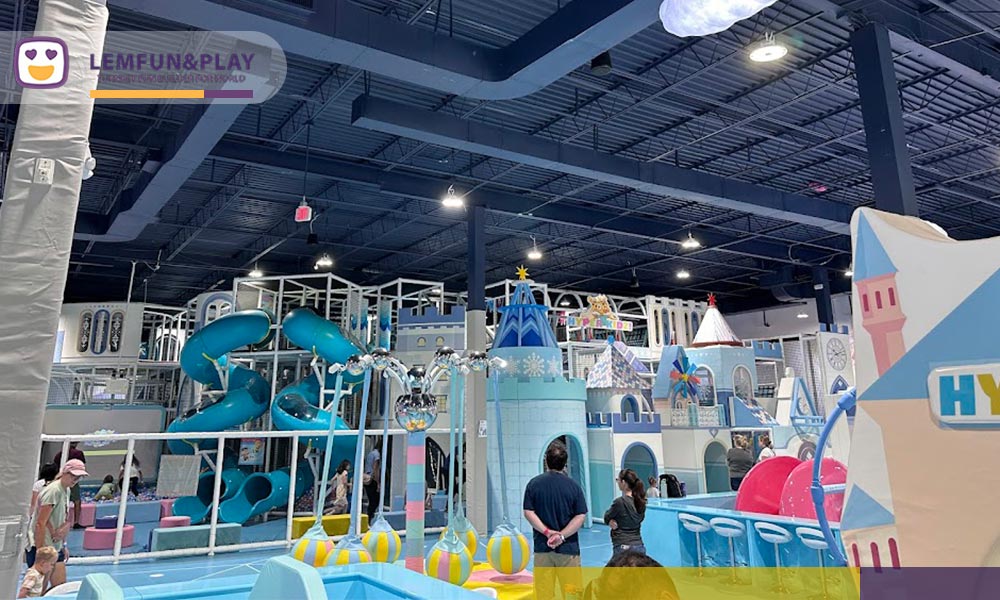
There are so many business plans analyze location with a lazy tone: "There are 50,000 people in this 3km radius area."
In my view, this data is worthless and my thought is very simple: If half of those people are elders, you are definitely like building a playground in a desert.
A real location analysis must have a deep research of the Commercial Circulation(the flow of foot traffic).
I have a client from Norway. He consulted me with a floor plan which looked perfect on paper featured with: central business district, high density and great transport. The only flaw is this place at the very edge of the mall's top floor.For a rookie manufacturer would have just quoted the price and shipped the goods.But I soonly told him to stop when i noticed this problem.
After analyzing the mall’s floor plan, I found the unit he chose was a dead zone. It was miles away from the only ground-level parking lot. Ask yourself honestly: will parent want to push a stroller across the entire mall to reach a corner playground?
I strongly advised him to give up that "prime place" and to moved the project to a lower floor with direct flow from the entrance. He finally followed my suggestion and chose a new venue. Obiviously, his business is still thriving now, because we calculated the "effort cost" for parents.
The Lesson of this part is : Do not just list population stats. You must simulate the parent's walking path. Location determines life or death. Don’t let the "Golden Address" fool you.
2.The ROI "Honesty Game": Calculating the Hidden Money traps
To get your signature, many manufacturers will exaggerate foot traffic. They will shrink the payback period to 6-8 months in their forecasts.
That number sounds wonderful,but it actually treats the investor like a fool.
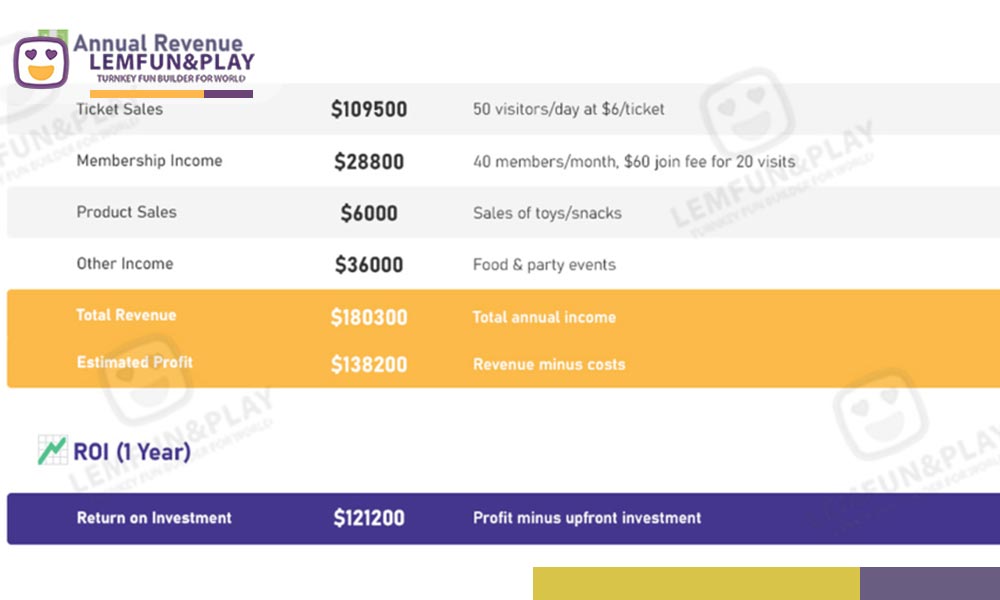
As the Project Steward at Lemfun, I force "Hidden Operating Expenses" into the budget when I consult for clients. Equipment isn't made of magic. Ball pits need professional cleaning every month. Slides suffer wear and tear. Staffing costs fluctuate wildly between weekends and weekdays. And you will face unexpected compliance costs after opening.
I prefer to show my clients the "Ugly Truth" in the plan: If traffic is only 50% of our projection, how do we survive?
Honest ROI calculations don't scare away real investors. When I tell a client, "Considering the market ramp-up and maintenance, your payback period is likely 12 to 18 months, not 6," they usually breathe a sigh of relief.
They know that quick riches are usually scams. Lemfun offers security based on reality.
3.The core of prosperity: Fighting Homogeneity with "Revenue Per Sqm"
In the indoor playground business, it's a normal situation that your competitor open right next door. Clashing outfits isn't scary, the worst thing is the identical business models.
How can you avoid a price war when you in such a situation? In my business plans, I never let clients blindly purchase weird or never-before-seen equipment. I shall pay more attention to the operational logic.
A client in Hungary was confused by such a problem: Two competitors were opening nearby with very similar setups. He managed to build a bizarre, sci-fi theme to stand out.
I told him: There is no need to be a maverick on theme. Most classic themes like macarons or oceans are all market-tested. What we need to change is not the look but the core. We soon provided a reliable solution: putting a sticky membership system into the playground and optimizing the activities for birthday parties. His playground is now the top in his area because of the different operation methods instead of innovative look.
Sometims my clients will ask, "Bob, why is your price 15% higher than the guys down the street?" I always show the data.
In my Canadian project with a 1,250 square meter site.I showed my customer how we utilized vertical space so as to prove I wasn't coverselling. What's more, we were not satisfied with just filling the floor;for what we did is building indoor play structures on top of the frame and hung ziplines above the Ninja course.
Furthermore, I cut into his play area to add high-margin Party Rooms and a café. That extra 15% in upfront cost doubled his Revenue Per Square Foot. That is the "Product Moat" Lemfun builds into the business plan.
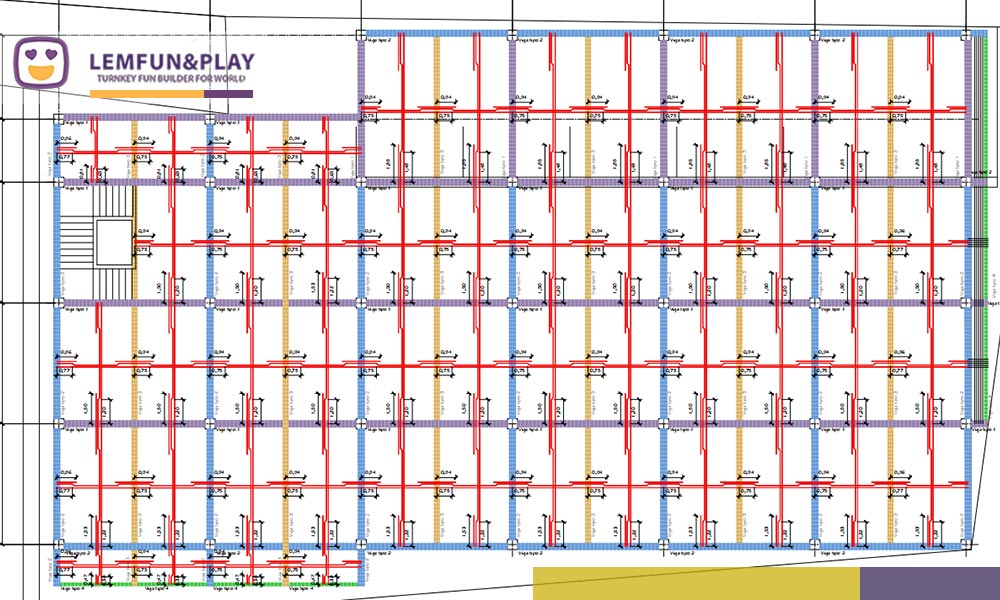
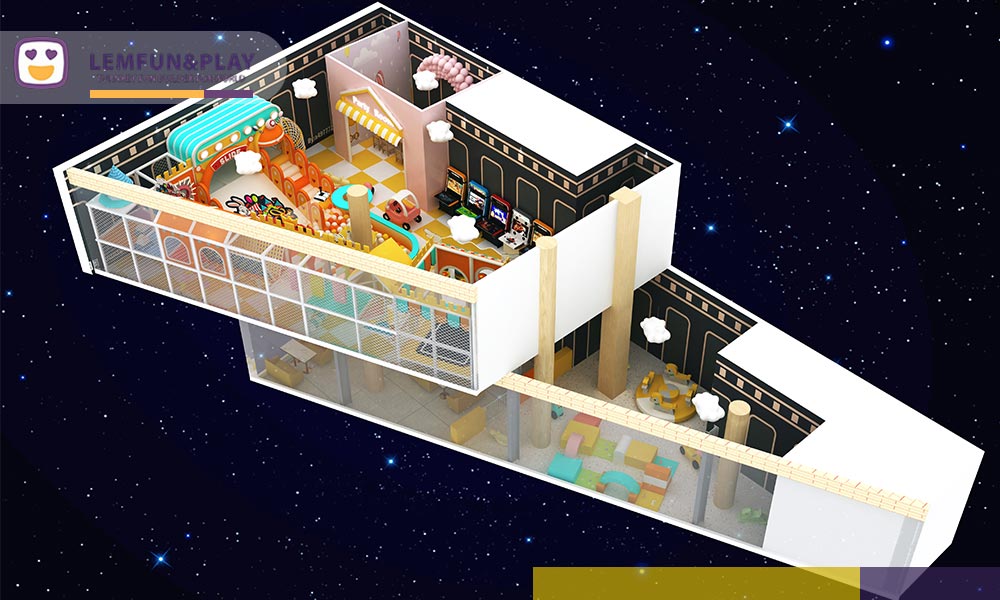
I have seen too many projects with beautiful 3D renderings that turn into a disaster on site. Fire exits that are too narrow. Ceiling heights that were mismeasured, meaning the slides won't fit. Columns blocking the slide exits.
These rookie mistakes happen when salespeople don't talk to engineers.
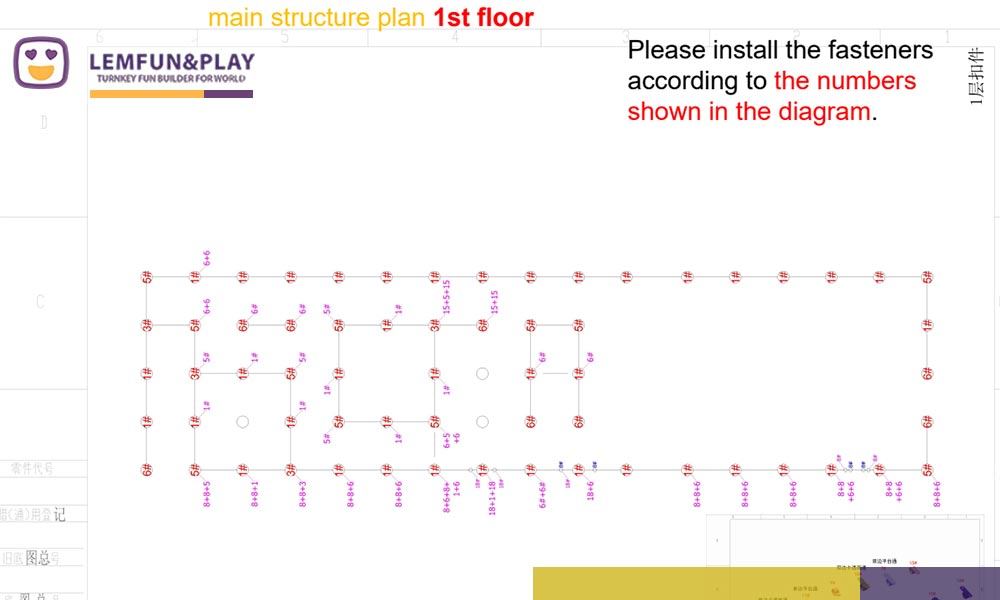
At Lemfun, we have a strict "No Info, No Drawing" rule. We established a rigorous error-correction mechanism. Our engineers won't touch a pen until we have every detail of your site—sprinkler locations, column width, and ceiling variance. Before production, every drawing undergoes a double-check.
A perfect business plan must include an "Engineering Risk Checklist." We predict the landmines so you don't have to tear down your playground and rebuild it.
My clients are busy. They don't want to know how many bottles of water were sold today. They want to know if the asset is healthy.
Therefore, in the Operations section of our plan, I don't pile up useless spreadsheets. I design a "Minimalist Monitor" for investors. You only need to watch four numbers:
Monthly Net Profit: The bottom line.
Labor Cost Percentage: Is the scheduling efficient?
Marketing ROI: Are we burning money or printing it?
Maintenance Alerts: Is the equipment degrading?
This frees you from the daily grind, allowing you to be what you are: an investor, not a janitor.
Writing a business plan isn't about painting a pretty picture. It’s about giving your capital a clear target.
We don't plan for failure, but we must respect the market. The value of Lemfun lies in using our 10 years of experience to clear the minefields—from site selection and design to production and operations.
If you are tired of cookie-cutter PPT templates and want a partner who knows the trade and speaks the truth, Lemfun is ready to serve.
FAQ: Real Talks on Indoor Playground Investment
Q1: How long does it take to write a proper Business Plan?
A1: It is a deep customization process which usually takes 1-2 weeks.A qualified indoor playground business plan is not a fill-in-the-blank template. It always need the Lemfun to make a research of the local demographics, competitors, and specific site engineering conditions in customer's area.
To be honest, a provider claiming he can "generate one in a day" is only aiming on your money.
Q2: Why your quotations are always more expensive ?
A2:Because we sell "Operational Grade" assets, not just a mess of plastic and steel.
Most cheap playground equipment manufacturers use materials that only meet "static display standards."
But our commercial indoor playground equipment is built for high-frequency abuse and longevity.
When you take the "revenue per square meter" logic into consideration like the vertical stacking in the Canada case, you will naturally find our solution saves you massive amounts in maintenance and renovation costs down the line.
Q3: Is the average payback period for an indoor playground really 6 months?
A3:Absolutely not, and you should run from anyone who promises you that.
Based on my 10 years of actual data, a healthy, compliant, and well-run indoor park typically sees an ROI in 12 to 18 months. Claims of a 6-month return usually mean they are hiding the pressure of post-rent-free periods, equipment depreciation, and necessary marketing spend. You need a real financial forecast, not a sales pitch.
Q4: If the location is good, will any equipment make money?
A4:This is the biggest rookie mistake; homogenous equipment is a profit killer.
Location is vital, but if your park looks exactly like the one in the mall next door, parents have no reason to be loyal to you. Lemfun focuses on "Differentiated Experience." Even with standard themes, we use flow design, interactive tech, and secondary revenue zones (like party rooms) to increase dwell time and spending per head.


We use cookies to enhance your browsing experience, serve personalized ads or content, and analyze our traffic. By clicking "Accept All", you consent to our use of cookies.
